
Does Stress Cause Neck Pain?
Does stress cause neck pain? The short answer is no! At Ambassador Physical Therapy, we like to say “contributes to” instead of “causes.” The casual way healthcare professionals throw around terms can lead to confusion and, worse still, ineffective treatment.
Fortunately, our highly skilled therapists know how to dig deep and find the root cause of your neck pain, and this information helps you find relief!
Let’s discuss “Nicole”, a 40-something-year-old working mother of three. Nicole was used to being very active, balancing her work schedule with getting her kids to all the various activities and school functions that come with being a mom nowadays.
Her neck pain first started as a crick in the neck when she woke up one morning. As the day progressed from driving her kids around to sitting at her desk, she noticed that turning her head became more difficult and painful, making focusing on work nearly impossible. Nicole struggled to figure out why her neck started hurting and came to the conclusion that stress “must be” the culprit. The more pain and difficulty moving she had, the more convinced she was that stress was to blame.
Understanding Nicole’s Neck Pain
One of the most common things we hear from our patients is that their pain started for “no apparent reason.” Like Nicole, people will wake up with a crick in their neck or notice a stiffness turning when driving in the car. It is also common for people to notice tightness in their upper back and neck after a long day.
So, what is actually the source of the pain? In most cases, there is an issue with the neck joints or the neck muscles due to prolonged positions. Our neck joints don’t like remaining in any position for extended periods. In Nicole’s case, she first noticed her pain in the morning, which may have been related to her neck position while sleeping. It is also important to note that in Nicole’s case, the first sign of any issue was in the morning when she woke up, unrelated to stress.

As Nicole’s day progressed, her pain got worse. But this also was more likely related to how she held her neck while driving or sitting at her computer. In both cases, her posture, specifically how she held her neck, seems to have contributed to her pain. Prolonged sitting can lead to a forward head position, resulting in tension to soft tissue (i.e., muscles, tendons, and ligaments) or negative changes to our blood flow.
The muscles of our neck function best when we move them. So, holding her head in one position likely led to irritation of the muscles and affected her ability to move her neck, which in turn caused stress.
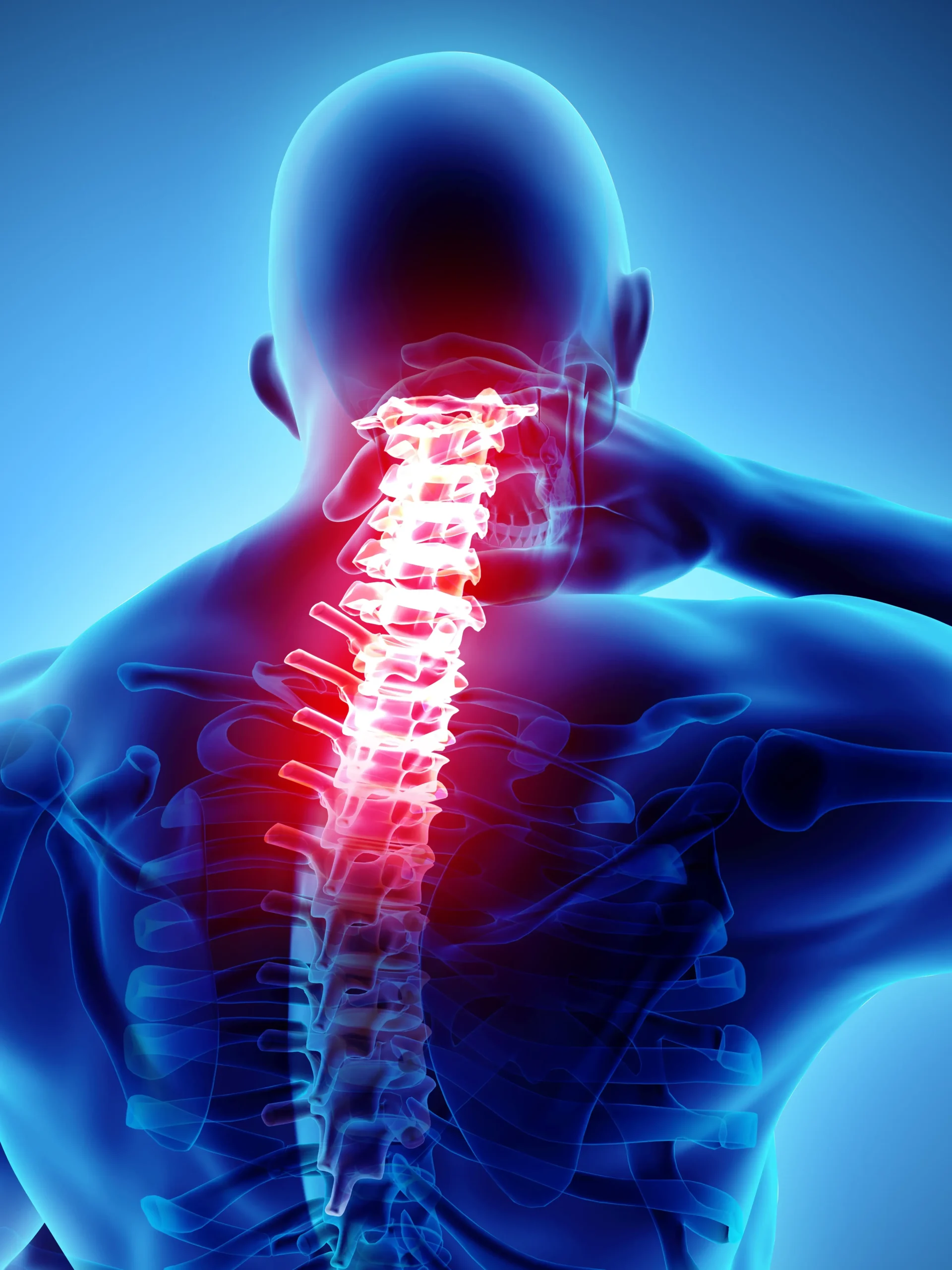
Stress “contributes” to neck pain because, when we experience stress, our bodies naturally respond by tensing up as a protective measure. This tension can lead to discomfort, particularly in the neck and upper back region. Research studies have found that individuals with higher stress levels reported increased neck pain as compared to those with lower stress levels. This is why we say “contributes” to, but not the cause of, neck pain.
How Physical Therapy Can Help Alleviate Neck Pain
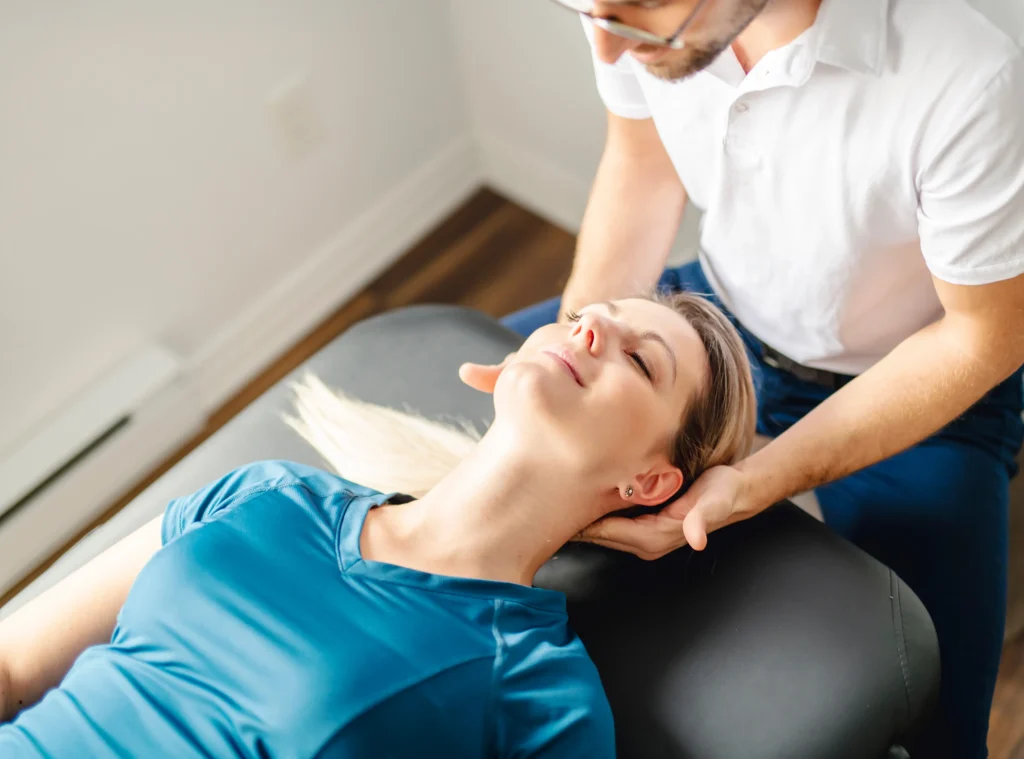
We will target the source of your pain by performing a thorough examination, starting with your medical history and details about how, when, and where your symptoms began. As we saw with Nicole, determining how, when, and why the pain started helps us eliminate possibilities and get to the actual root cause(s).
Our therapists will also analyze your posture and movement to identify any limitations or restrictions contributing to your condition. We’ll use this information to design a program that addresses your specific needs.
Our treatment plans focus on relieving your pain and improving your posture, mobility, strength, etc., and educating you about managing your symptoms. Your program will likely include manual therapy (i.e., soft tissue work and/or joint mobilizations), targeted stretches, exercises, activity modification, or posture recommendations.
We'll listen to your unique situation and specific issues and then work to help you find relief and get back to your normal routine.
Exercise of the Month
Neck Glide
(Neck)
Stand tall with your shoulders relaxed and your head in a neutral position. Gently draw your head straight backward, keeping your chin level—like you’re trying to make a double chin. Avoid tilting your head up or down. Hold briefly, then return to the starting position.
3 Sets, 10 Reps.
Book Your Appointment Today!
If you’re dealing with neck pain or looking for someone to help you figure out what is causing your issues, call us today and set up a consultation!
Healthy Recipe: Spinach and Goat Cheese Frittata

Frittatas are incredibly easy to make, packed with protein, and perfect for a light spring breakfast, lunch, or dinner.
Ingredients (serves 2)
- 8 large eggs
- 1/4 cup milk (any kind)
- 1 tablespoon olive oil
- 3 cups fresh baby spinach (a staple spring vegetable)
- 1/4 cup crumbled goat cheese
- Salt and freshly ground black pepper to taste
Instructions
- Preheat: Preheat your oven to 400°F (200°C).
- Whisk Eggs: In a medium bowl, whisk together the eggs, milk, a pinch of salt, and a few grinds of black pepper until well combined and slightly frothy.
- Sauté Spinach: Heat the olive oil in an oven-safe skillet (like cast iron) over medium heat. Add the fresh spinach and cook for 1-2 minutes until it is just wilted.
- Combine: Pour the egg mixture over the wilted spinach in the skillet. Give it a quick, gentle stir to distribute the spinach evenly.
- Cook the Base: Let it cook undisturbed on the stovetop for about 3-4 minutes, or until the edges start to pull away from the pan and the bottom is set.
- Add Cheese: Sprinkle the crumbled goat cheese evenly over the top of the eggs.
- Bake: Transfer the skillet to the preheated oven and bake for 10-12 minutes. You will know it is done when the eggs are completely set in the center and the top is slightly puffed and golden.
- Serve: Let the frittata cool for a few minutes before slicing it into wedges. It is excellent served warm or at room temperature alongside a light side salad!
Sources
Information in this newsletter is intended for educational purposes only and does not constitute medical advice. Always consult a qualified physical therapist or healthcare provider regarding your specific condition. https://www.sciencedirect.com/science/article/pii/S1836955320301417?via%3Dihub, https://pubmed.ncbi.nlm.nih.gov/36180150/, https://www.ncbi.nlm.nih.gov/pmc/articles/PMC2270377/, https://pubmed.ncbi.nlm.nih.gov/28972599/, https://www.infinebalance.com/spinach-goat-cheese-frittata/