

Back Pain Slowing You Down? Physical Therapy Can Help!
Here’s a fact about back pain that may bring you some comfort: it’s one of the most common musculoskeletal complaints in the world. Around 80% of people will have back pain at least once. So, if you’re suffering now, you probably aren’t the only one!
Of course, that thought does little to help if your back pain keeps you from performing day-to-day activities, as it often does. Back pain is often accompanied by mobility restrictions that make walking, rising from sitting, or bending over difficult. And if left untreated, it can sometimes lead to long-term pain and dysfunction.
At Ambassador Physical Therapy, we know how debilitating back pain can be. Our team of dedicated physical therapists will help you understand the cause or causes of your back pain and work with you to develop a personalized treatment plan that will let you get back to the activities you love to do.


What Causes Back Pain?
One of the reasons that back pain is so common is that it’s associated with several different injuries, underlying conditions, or lifestyle factors. That said, most back pain is non-specific, meaning it’s not caused by a specific disease or specific structural problem, but caused by mechanical issues. Mechanical issues are difficult to pinpoint and may include multiple tissues in and around the spinal joints.
The first step in treating your back pain is understanding what’s contributing to it. Our therapists will perform a comprehensive evaluation to help us learn as much as possible about your experience with back pain, including screening for any mobility limitations or weakness you’re struggling with.
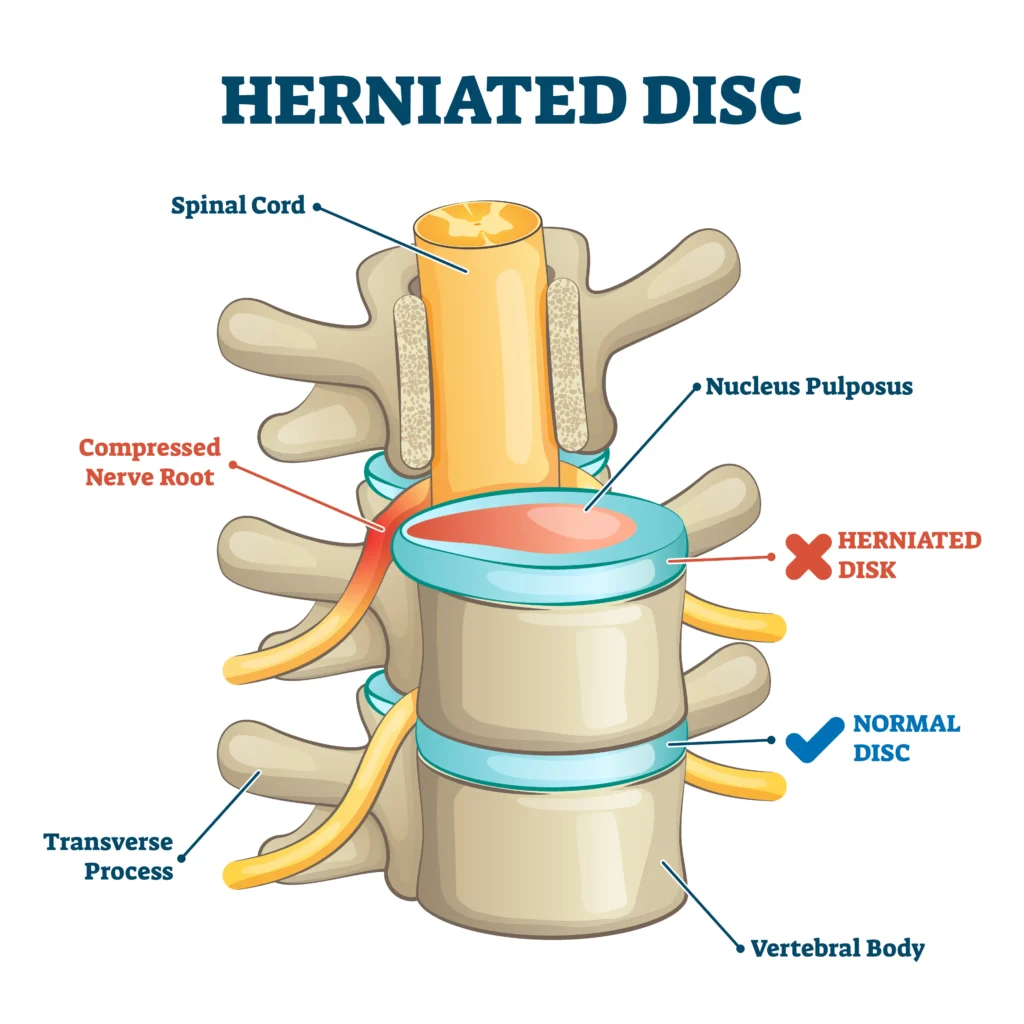
Here are some of the more common sources of back pain that we see at our clinic:
- Strains and Sprains: A strain occurs when you injure the muscles in your back. A sprain occurs when you injure the ligaments that link your spinal vertebrae. Both can cause pain and limited mobility, and they often result from lifting with improper form (such as twisting while lifting) or attempting to lift something too heavy.
- Herniated Discs: Soft, flexible discs separate and cushion your spinal vertebrae. If one of those discs herniates — that is protrudes out — and irritates a nearby nerve, it can lead to intense pain, feeling “stuck” in a stooped over position, and often pain down the leg known as sciatica.
- Osteoarthritis: Osteoarthritis is the most common form of arthritis in the world, occurring when the cartilage and bone tissue in a joint degenerate and become inflamed. While we often associate it with the hips, knees, or hands, it can occur in the spine, too. Spinal osteoarthritis is sometimes called spondylosis.
- Lifestyle Factors: Several factors can contribute to lower back pain, including improper posture, prolonged sitting, or weakness in the muscles that wrap and support your spine (your core muscles).
Exercise of the Month
Lower Trunk Rotations
Lie on your back with knees bent and feet flat. Gently drop your knees to one side while keeping your shoulders down, then return to center and rotate to the other side. This improves lower back flexibility.
Why Physical Therapy at Ambassador Physical Therapy Is Your Back Pain Solution
While back pain often resolves on its own within 1-3 months, physical therapy is an excellent choice for people with particularly intense pain or extremely restricted mobility. It’s also useful for people with chronic back pain, defined as pain that lingers past that three-month mark.
We customize all our back pain treatment plans according to your specific needs: the location and severity of your back pain, any mobility restrictions, your ability level, and overall goals. We’ll work to address the underlying issues causing your pain rather than simply masking the symptoms.
How will we do this? Through a blend of the following techniques:
- Manual therapy helps manage pain, promote blood circulation, and improve mobility.
- A personalized therapeutic exercise plan improves the strength, flexibility, and endurance of your back and core muscles. Muscle weakness significantly contributes to lower back pain, so exercise is a must.
- Specialized training, such as proper techniques and activities that simulate functional movements you’ll need to perform (i.e., squats, lunges, lifting, etc.).
- Prevention strategies help reduce future back pain incidents. These strategies might include postural corrections or suggestions for at-home exercises, such as a walking program or regular strength and mobility practice.
Sources: https://www.choosept.com/guide/physical-therapy-guide-low-back-pain, https://pubmed.ncbi.nlm.nih.gov/32669487/, https://www.cochranelibrary.com/cdsr/doi/10.1002/14651858.CD004057.pub3/full
Get Moving Again with Physical Therapy!
Back pain is more than just pain. It can severely restrict your mobility, leading to less exercise and movement, further contributing to pain and dysfunction. The Ambassador Physical Therapy team is here to help you break that cycle and find relief from back pain for good.

Delicious Healthy Spinach Dip
- 2 x 10 oz packages chopped spinach, frozen
- 1/2 large onion, finely chopped
- 2 large garlic cloves, minced + 1 small garlic clove, grated
- 2 tbsp oil, for frying
- 1 medium carrot, finely grated
- 2 cups Greek or regular plain yogurt, at least 2% fat
- 1/4 cup mayo
- 1 tsp salt
- Ground black pepper, to taste
Defrost spinach in a colander overnight or microwave it. Squeeze out excess water and place in a medium bowl. In a non-stick skillet over medium heat, sauté onion, 2 minced garlic cloves, and carrot in a bit of oil for about 7 minutes. Add to the spinach along with yogurt, mayo, salt, and pepper. Mix well. Grate in more garlic to taste. Chill for a few hours if possible. Serve with pretzel chips or brown rice crackers.